Featured
Table of Contents
Regional Exposure in San Francisco for Multi-Unit Brands
The shift to generative engine optimization has changed how services in San Francisco maintain their existence throughout lots or hundreds of stores. By 2026, traditional search engine result pages have actually mostly been replaced by AI-driven response engines that prioritize synthesized data over a basic list of links. For a brand handling 100 or more locations, this indicates credibility management is no longer practically reacting to a few talk about a map listing. It has to do with feeding the big language models the particular, hyper-local information they need to recommend a particular branch in CA.
Distance search in 2026 counts on an intricate mix of real-time accessibility, local sentiment analysis, and confirmed client interactions. When a user asks an AI representative for a service recommendation, the agent does not just try to find the closest option. It scans countless data indicate discover the location that the majority of precisely matches the intent of the inquiry. Success in modern-day markets typically requires Professional Bay Area Optimization to guarantee that every private shop keeps a distinct and favorable digital footprint.
Managing this at scale provides a significant logistical hurdle. A brand name with areas scattered across North America can not rely on a centralized, one-size-fits-all marketing message. AI agents are created to smell out generic business copy. They choose genuine, local signals that show an organization is active and appreciated within its specific community. This requires a method where regional managers or automated systems create unique, location-specific content that reflects the real experience in San Francisco.
How Distance Search in 2026 Redefines Track record
The principle of a "near me" search has evolved. In 2026, distance is determined not just in miles, however in "relevance-time." AI assistants now determine for how long it requires to reach a location and whether that location is presently satisfying the requirements of people in CA. If a place has an abrupt influx of negative feedback regarding wait times or service quality, it can be instantly de-ranked in AI voice and text results. This occurs in real-time, making it essential for multi-location brands to have a pulse on each and every single website all at once.
Professionals like Steve Morris have kept in mind that the speed of details has made the old weekly or monthly credibility report outdated. Digital marketing now needs immediate intervention. Many companies now invest heavily in Bay Area Site to keep their data accurate across the thousands of nodes that AI engines crawl. This includes preserving constant hours, upgrading regional service menus, and ensuring that every evaluation gets a context-aware action that assists the AI comprehend the service better.
Hyper-local marketing in San Francisco must likewise represent regional dialect and particular local interests. An AI search presence platform, such as the RankOS system, helps bridge the space in between business oversight and local importance. These platforms use machine finding out to identify patterns in CA that may not show up at a national level. For instance, an unexpected spike in interest for a specific item in one city can be highlighted in that area's regional feed, indicating to the AI that this branch is a main authority for that topic.
The Function of Generative Engine Optimization (GEO) in Local Markets
Generative Engine Optimization (GEO) is the follower to traditional SEO for companies with a physical existence. While SEO concentrated on keywords and backlinks, GEO focuses on brand name citations and the "vibe" that an AI views from public data. In San Francisco, this means that every mention of a brand name in regional news, social media, or community forums adds to its general authority. Multi-location brands must make sure that their footprint in this part of the country corresponds and reliable.
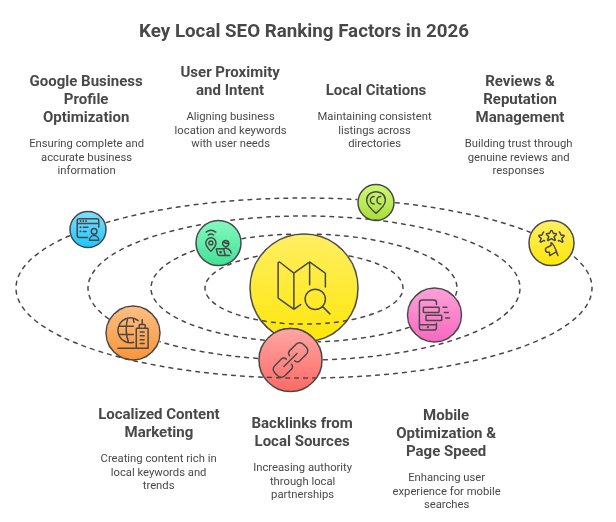
- Evaluation Velocity: The frequency of brand-new feedback is more crucial than the overall count.
- Belief Nuance: AI searches for specific appreciation-- not simply "fantastic service," but "the fastest oil change in San Francisco."
- Local Content Density: Routinely upgraded images and posts from a specific address assistance confirm the area is still active.
- AI Browse Presence: Making sure that location-specific information is formatted in such a way that LLMs can quickly consume.
Due to the fact that AI agents serve as gatekeepers, a single poorly handled location can often shadow the track record of the entire brand. The reverse is also real. A high-performing store in CA can supply a "halo impact" for close-by branches. Digital companies now concentrate on producing a network of high-reputation nodes that support each other within a particular geographic cluster. Organizations frequently search for Bay Area SEO in San Francisco to solve these problems and maintain an one-upmanship in a significantly automatic search environment.
Scalable Systems for 100+ Storefronts
Automation is no longer optional for services running at this scale. In 2026, the volume of information generated by 100+ areas is too large for human teams to manage by hand. The shift toward AI search optimization (AEO) indicates that businesses need to utilize specialized platforms to deal with the increase of local queries and evaluations. These systems can spot patterns-- such as a recurring grievance about a particular staff member or a broken door at a branch in San Francisco-- and alert management before the AI engines choose to demote that place.
Beyond simply handling the unfavorable, these systems are used to enhance the favorable. When a customer leaves a radiant evaluation about the environment in a CA branch, the system can instantly suggest that this sentiment be mirrored in the place's local bio or marketed services. This creates a feedback loop where real-world excellence is immediately equated into digital authority. Industry leaders emphasize that the objective is not to trick the AI, but to provide it with the most accurate and positive version of the reality.
The geography of search has actually likewise become more granular. A brand name might have ten places in a single big city, and every one needs to compete for its own three-block radius. Distance search optimization in 2026 treats each storefront as its own micro-business. This needs a dedication to local SEO, web design that loads quickly on mobile phones, and social media marketing that seems like it was composed by someone who really resides in San Francisco.
The Future of Multi-Location Digital Strategy
As we move even more into 2026, the divide between "online" and "offline" track record has disappeared. A customer's physical experience in a shop in CA is almost instantly reflected in the information that influences the next consumer's AI-assisted decision. This cycle is quicker than it has ever been. Digital companies with workplaces in significant centers-- such as Denver, Chicago, and New York City-- are seeing that the most effective clients are those who treat their online track record as a living, breathing part of their everyday operations.
Keeping a high requirement across 100+ locations is a test of both innovation and culture. It needs the ideal software to keep an eye on the data and the right people to interpret the insights. By concentrating on hyper-local signals and ensuring that distance search engines have a clear, positive view of every branch, brand names can prosper in the period of AI-driven commerce. The winners in San Francisco will be those who acknowledge that even in a world of international AI, all service is still regional.

Latest Posts
Including an Innovative Flare to Your Next Household Trip
Advanced Methods for Improving Local Maps Rankings
How to Dominate Near Me Discovery Results